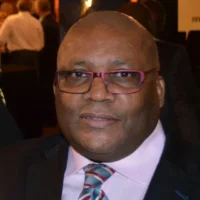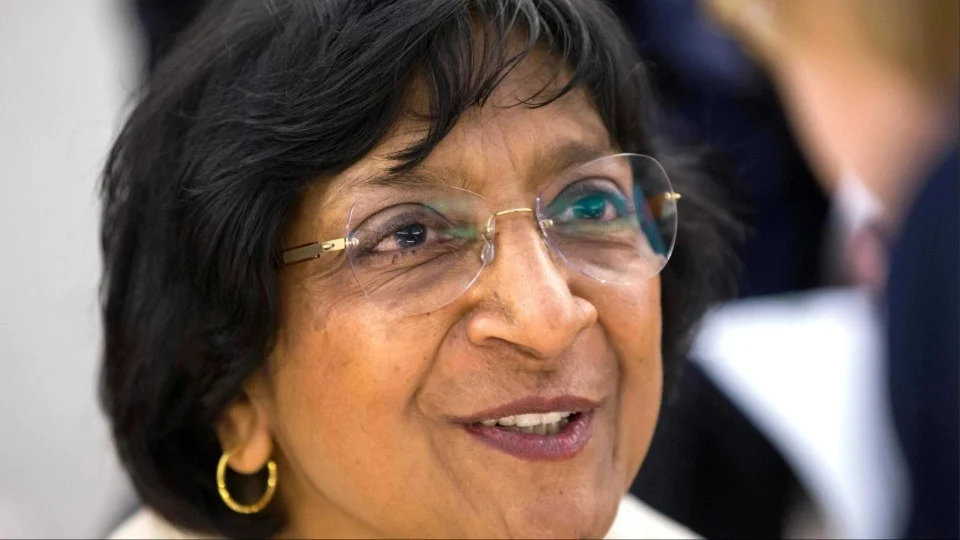
Editor’s Note: Former South African Ambassador to the United States Welile Nhlapo wrote the article below about the awarding of the 2026 Nobel Peace Prize to South African jurist Navanethem “Navi” Pillay. In it, Nhlapo highlights a fundamental struggle between the rule of law and right-wing authoritarianism. Pillay’s recognition stands in sharp contrast to Donald Trump’s bitter, self-serving reaction to the news. Dismissing Pillay as an unknown and branding the committee “crooked,” Trump insisted he deserved the prize himself while condemning the United Nations Charter and international law frameworks that Pillay spent her life building.
On Oct. 9, in the gloom and doom triggered by migration- and immigration-related violence in the City of Durban, South Africa, the same city was in the news for a different but somewhat related development.
Indeed, every cloud has a silver lining.
In Norway, the Nobel Peace Committee announced the Nobel Peace Prize 2026 winner as the Durban-born jurist Navanethem “Navi” Pillay, for her efforts to promote peace and international law. The announcement shifted the narrative about South Africa to one of celebration and acknowledgment of a brave daughter of this country.
It restored the admiration and respect this prize represented but was almost losing.
The decision reaffirmed that such a recognition honors brave warriors in the fight for justice and human rights. It is awarded to persons of impeccable credibility earned in the service of humanity. All congratulatory messages reaffirmed this reality.
Indeed, everything she stood for, worked for, and is admired for is testimony to what all peace-loving people wholeheartedly aspire to.
Pillay’s whole professional life and conduct challenge us to examine the values and principles practiced by anyone who wants to lay legitimate claim to servant leadership. Her response to the news of this decision was genuinely humble and raw honesty.
Some of us have been lucky and privileged to witness her in action as a presiding judge in the Rwanda Tribunal in Arusha.
It took a lot of strength and courage to listen to the survivors of genocide testifying against one of the perpetrators of this heinous crime against humanity. The presiding judges sat there very attentive and calm, taking notes and raising questions where necessary.
Those of us who witnessed part of that session left that place traumatized. How these judges survived many months of listening to testimonies about one of the worst crimes against humanity shows the strength of what human beings go through to ensure that justice is served. I am citing only this one instance that is still etched in my memory.
This and many other instances in the various judicial capacities she served compel us to celebrate this monumental human endeavor.
I can only hope that this rich experience will motivate young women to believe in themselves and claim the space we should afford them as their own. South Africa should pride itself on this priceless contribution to international law, peace, and human rights.
This is particularly important at a time when the universal legal instruments and institutions are under attack from those who claim that they are the true custodians of this important pillar of the United Nations Charter.
It is our duty as the “people of the United Nations” to defend our organization from those who seek to destroy it when it does not serve their interests. They have shown themselves once again, in their pronouncements and actions after the announcement of the 2026 Nobel Peace Prize winner.
Why is this important for the continent?
This is one pillar of the UN Charter that, as Africans, we need to pay attention to as part of our comprehensive governance reform strategy. In this way, we can strengthen the nexus between peace, stability, security, and development. This means also paying particular attention to the reason why political parties are formed.
We need to know who these people are. What do they stand for? What are their real interests? We need to be concerned about the new disturbing reality that confronts us. Frankly, the bar for entry into politics has become so low that any group of individuals can wake up and declare their intention to contest elections.
Why should we entrust such people with governance responsibilities when their very existence is proximity to state resources for enriching themselves? It becomes worse when they gang up against the very electorate and form coalitions that start operating like criminal networks. Such institutions cannot safeguard the rule of law and promote human rights.
When governance collapses, there can be no security, peace, stability, and development. People start becoming unsafe and insecure and start looking for survival outside their country of birth.
Talk of any national interest and nation-building becomes deceptive empty rhetoric. What we need most is agency that will ensure that all the rights guaranteed in our constitutions are strictly observed. Only in such conditions can we succeed in silencing the guns or, better still, prevent conflicts from spiraling into an orgy of uncontrollable violence.
It is in our hands to build infrastructures of durable peace, at the center of which will be communities themselves and accountable governance structures they elect.
Peace defenders like Navi Pillay will multiply into all spheres of governance from community to global multilateral institutions. Africans now have the opportunity to shape the emerging global order.
No paywalls at People’s World
We hope you appreciated this article. At People’s World, we believe news and information should be free and accessible to all, but we need your help. Our journalism is free of corporate influence and paywalls because we are totally reader-supported. Only you, our readers and supporters, make this possible. If you enjoy reading People’s World and the stories we bring you, please support our work by donating or becoming a monthly sustainer today. Thank you!
CONTRIBUTOR