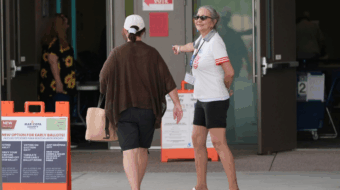
Last week, early voting in the 2026 midterms opened in Virginia, Vermont, South Dakota, and Minnesota. Voters in Illinois can start going to the polls tomorrow, September 24. Unless you live in Alabama, Mississippi, or New Hampshire— states that only allow you to vote on Election Day—an early voting site will open soon in your community ahead of the national midterms on November 3.
For months, various agencies of the federal government have engaged in an aim-at-everything strategy to reduce the number of voters in this midterm election. The New York Times summed up their coverage this way:
At Mr. Trump’s direction, the federal government has intensified efforts this year to intervene in state administration of elections, as he pushes discredited theories about voter fraud and claims that undocumented immigrants and others who are ineligible to vote can be found on state rolls.
From the administration’s efforts to intercept mail-in ballots through the U.S. Postal Service to its efforts to check state voter rolls against an illegally populated national data base, federal courts have consistently ruled against these efforts, as they did when Trump challenged the results of the 2020 election. But this all-out effort to delegitimize the 2026 midterms in advance begs the basic question that voter suppression efforts should always lead us to ask: namely, why is it they don’t want people to vote
In reporting on voter suppression, it’s easy for journalists, who are trained to focus on the story and report both sides, to home in on the false accusations of voter fraud or the technicalities of proposed changes and how they would work. But whenever someone keeps coming back to the same strategy with a different tactic, it’s important to ask why. Why do they want fewer people to vote? The proposed obstacles are many, and they have evolved over the years. But the goal of voter suppression tactics, from the poll taxes of a century ago to the high-tech voter roll purges of today, has consistently been to reduce the overall turnout in elections by making it more difficult for some people to vote. At a recent Repairers of the Breach press conference, our attorney Kat Roblez explained how these costs are born by some voters more than others.
When voter suppression hasn’t worked, extremists who control state legislatures have re-drawn voting districts to favor their preferred candidates. In other countries, scholars who study democratic backsliding have called this “electoral authoritarianism.” In the United States, we usually call it a gerrymander.
The state of North Carolina gerrymandered Congressional District 1 last year, ahead of the Supreme Court’s Callais decision, which gutted the Voting Rights Act and set off a string of gerrymanders this spring. In response, Repairers of the Breach and our partners put hundreds of people on country roads over four days in February to march through small towns, talking about the power of a commitment to “Love Forward Together” ahead of early voting in our primary elections. Thousands rallied outside the state Capitol when marchers arrived on that Saturday, and when the results came in for the primary in the district we’d marched across, we had a proof of concept: voter turnout had increased by 45% over the previous midterm primary.
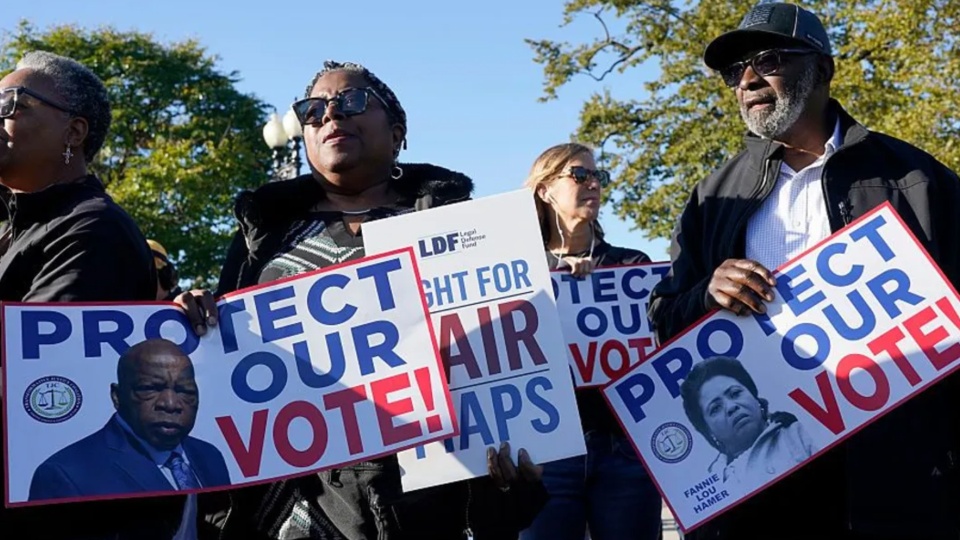
The impacts of voter suppression and election subversion are real, but when trusted messengers from a community use the tactic of a nonviolent march to draw attention to voter power, it is possible to increase turnout by engaging a new, expanded electorate. In every Congressional race in the country over the next six weeks, there are more people who didn’t vote in the last midterm election than voted for either candidate. Infrequent voters have the power to reclaim the tools of democracy, and marches to the polls are a proven tool to reach them.
This is why Repairers of the Breach has launched our Love Forward Together campaign to organize 1,000 marches to the polls ahead of this year’s midterm elections. We are training local leaders, offering logistics and media support, and leading a national tour to draw targeted media attention to significant turnout efforts. Our foreparents in the civil rights movement knew something about authoritarians who didn’t want more people to vote. They gave us a tool that not only galvanizes courage and invites others in, but also offers a direct challenge to the fake populism of people who say they want to “defend democracy” while doing everything in their power to silence the voices of everyday people.
With early voting already underway, our 1,000 marches to the polls have already begun. Disability rights activists are organizing to “roll to the polls,” churches are hosting “souls to the polls,” and people who’ve lost their healthcare are marching for their lives. A biker club reached out to say they wanted to go to an early voting site together. “Come on,” we said. This is a movement for everyone.
As of today, 414 marches are registered on our national map. Help us get to 1,000 marches by registering to host a march to the polls in your community today. We’ll send you a tool kit to get started and connect you with resources to support you through the planning process.
Our Moral Moment w/ Bishop William Barber & Jonathan Wilson-Hartgrove
As with all op-eds published by People’s World, the views reflected here are those of the author.
We hope you appreciated this article. At People’s World, we believe news and information should be free and accessible to all, but we need your help. Our journalism is free of corporate influence and paywalls because we are totally reader-supported. Only you, our readers and supporters, make this possible. If you enjoy reading People’s World and the stories we bring you, please support our work by donating or becoming a monthly sustainer today. Thank you!
CONTRIBUTOR