

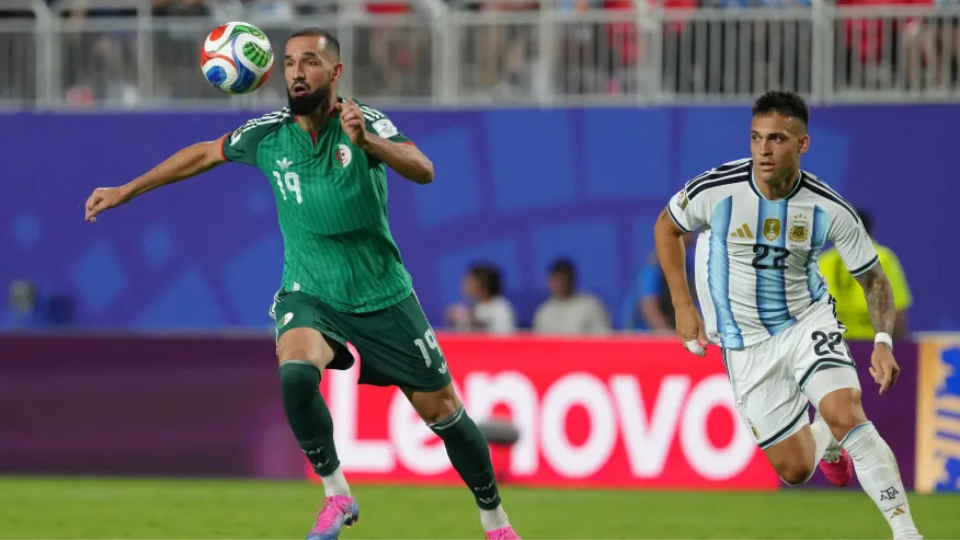
ALGIERS—What began as the reported assault of a 14-year-old Algerian-American boy during FIFA World Cup celebrations in Boston has rapidly evolved into a matter of diplomatic significance, drawing direct intervention from Algeria’s highest political leadership and placing the case firmly within the framework of bilateral legal and consular cooperation between Algeria and the United States.
According to Algerian media reports, Wassim, a 14-year-old born in Boston who holds both Algerian and American citizenship, had joined friends at a FIFA World Cup fan zone to watch the Morocco–Netherlands match. Although he was wearing the Algerian national team jersey, reports indicate that he was supporting the Moroccan team during the match before he found himself isolated after his companions left him. He was subsequently reported to have been assaulted by as many as thirty-five Moroccan supporters following a decisive moment in the game, an attack that was captured by surveillance cameras and quickly ignited widespread outrage across Algeria.
The incident, which has generated intense public attention throughout Algeria, is no longer being treated solely as a criminal investigation. Instead, it has become a test of the Algerian state’s commitment to protecting its citizens abroad and ensuring that legal accountability is pursued through established judicial channels.
President Abdelmadjid Tebboune publicly addressed the affair on Thursday after casting his ballot in Algeria’s legislative elections, confirming that the government has maintained continuous oversight of both the teenager’s medical condition and the ongoing legal proceedings in the United States.
In a direct demonstration of state engagement, the president made clear that the protection of the young victim had become a matter receiving attention at the highest levels of government, reflecting Algeria’s determination to defend the rights and security of its nationals abroad regardless of where they reside.
Clarifying reports surrounding the incident, Tebboune said the teenager is not a visitor who traveled to the United States for the 2026 FIFA World Cup but a permanent resident of Boston who holds both Algerian and American citizenship.
The president sought to reassure public opinion by confirming that the young victim had been discharged from the hospital and that his condition was stable, while stressing that the Algerian authorities continue to monitor developments closely from both medical and legal perspectives.
The case has prompted a coordinated institutional response extending from the Presidency of the Republic to Algeria’s diplomatic representation in the United States, illustrating a comprehensive effort to ensure that both the victim’s welfare and the judicial process receive sustained official attention.
Tebboune disclosed that he had personally remained in contact with Algeria’s Ambassador to the United States, Sabri Boukadoum, who has been supervising the matter on the ground while coordinating with the competent American judicial and law-enforcement authorities to ensure the proper conduct of the investigation and the legal process.
The presidential intervention follows the immediate mobilization of Algeria’s diplomatic services after reports of the assault emerged earlier this week.
Officials from the Algerian Consulate General in New York traveled to Boston to provide consular assistance to Wassim and his family while simultaneously initiating legal procedures alongside those undertaken by U.S. authorities.
According to Algerian media reports, investigators have relied on surveillance camera footage that enabled law-enforcement agencies to identify approximately thirty-five individuals suspected of involvement in the assault. The matter is now proceeding through the American judicial system, where criminal offenses involving physical assaults against minors may carry severe penalties, depending on the legal classification ultimately determined by the competent courts.
Beyond the legal proceedings, the incident has resonated deeply within Algeria.
Footage circulating across social media platforms ignited widespread public condemnation, transforming what initially appeared to be an isolated act of violence into a national issue attracting sustained political, diplomatic, and public attention. Calls for accountability have been accompanied by appeals for restraint, with numerous Algerian commentators urging supporters to allow the judicial process to proceed and avoid retaliatory actions.
Rather than allowing the matter to remain confined to routine consular channels, Algeria’s highest political authorities have elevated the affair into a question of national concern, signaling that the protection of Algerian nationals abroad—particularly minors—constitutes an integral component of the country’s diplomatic responsibilities.
In a gesture widely interpreted as one of national solidarity, Tebboune also announced that the Minister of Sports, Walid Sadi, had invited Wassim to attend Algeria’s FIFA World Cup Round of 16 encounter against Switzerland, allowing the young supporter to watch the national team from the stadium after the traumatic events in Boston.
The symbolic invitation has been viewed by many Algerians as an affirmation that the teenager has become far more than the victim of an isolated assault. Instead, he has come to embody a broader national commitment to safeguarding the rights, dignity, and security of Algerian citizens wherever they reside.
As criminal proceedings continue in the United States, the Boston assault has assumed a significance extending well beyond the individual facts of the case. For Algeria, it has become a demonstration of sustained diplomatic engagement, institutional responsiveness, and state responsibility toward its nationals overseas. For the United States, it remains a criminal investigation unfolding under established judicial procedures. Between the two countries, what began as an incident surrounding a global sporting event has evolved into a matter carrying legal, diplomatic, and symbolic weight on both sides of the Atlantic.
We hope you appreciated this article. At People’s World, we believe news and information should be free and accessible to all, but we need your help. Our journalism is free of corporate influence and paywalls because we are totally reader-supported. Only you, our readers and supporters, make this possible. If you enjoy reading People’s World and the stories we bring you, please support our work by donating or becoming a monthly sustainer today. Thank you!
CONTRIBUTOR
MOST POPULAR TODAY
Communists work to save ‘Millionaire Tax’ in Evergreen State

Controversial ‘God made Trump’ campaign ad produces bipartisan uproar

Westland Starbucks workers vote to unionize, becoming 20th Michigan store
HBCU students march to demand justice for Nolan Wells: “No water in his lungs!”

Leonard Peltier, longest serving U.S. political prisoner, should be free