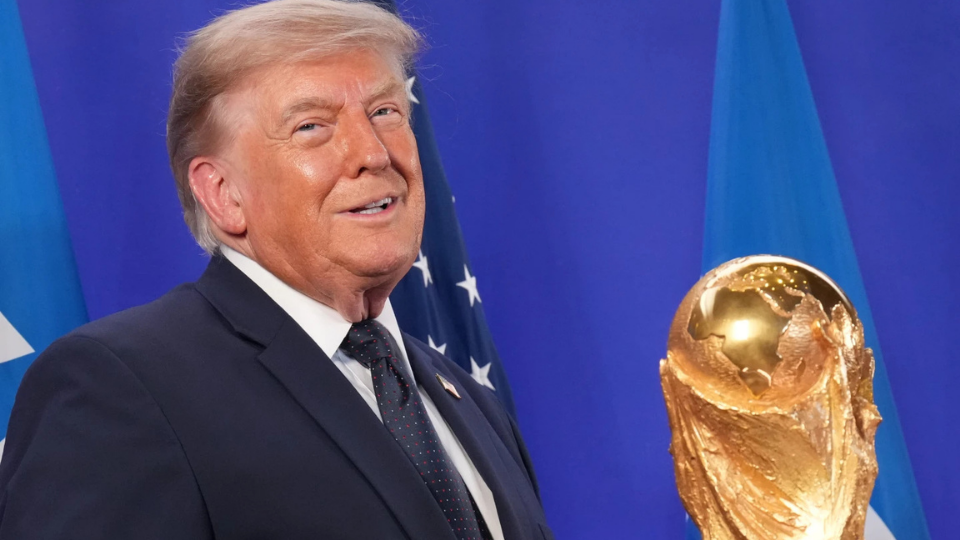
Sports has always billed itself as above petty indifferences, something that brings people together on the sanctity of the playing field. FIFA, the guardian of the soccer World Cup pledges to ensure accessibility to everyone, promising that each athlete will receive a reception that is “safe, welcoming and inclusive.” The Olympics broadcast themselves as bringing humanity, the entire world, together in games that foster global fellow feeling and boost the spirit of cooperation of the host country. In the U.S. football and baseball fields and basketball courts are places that supposedly brook no outside interference.
That daydream though is everyday being shattered by the cold hard drive of profit in this year’s World Cup, 2028’s Los Angeles Olympics and the omnipresence of sports betting, now intruding onto a field of play no longer sheltered from its cultural and dare we say political surroundings.
FIFA’s code of conduct has been violated in almost every way in this year’s North American World Cup, the largest sporting event in history. Accessibility is limited because of astronomical ticket prices that few can afford with New York’s Mayor Mamdani, a soccer fan, having to negotiate with the cup president who makes 6 million a year, for 1,000 tickets at an affordable 50 dollars for his constituents for the event in Met Life Stadium in New Jersey. To say nothing of Trump’s interference to revoke a red card suspension for the U.S. team’s leading scorer, an intervention that ended first in the team losing to Belgium and then in the Belgium players mocking Trump in the locker room by doing the Trump dance to “YMCA.”
In terms of treatment of athletes, Trump’s U.S. has imposed travel bans on more than a quarter of the countries taking part, with particularly heavy visa restrictions and levies on not only personnel but also fans from African, Caribbean, South and West Asian countries, with particularly rough treatment for Haiti, Iran, the Ivory Coast and Senegal.
Iranian players and their medical and training staff were, for the first two matches, not allowed to stay in the U.S., where the match was held, forced to cancel their training grounds in Arizona, and having to fly each day of and night after the match back to their more limited overnight and training facilities in Tijuana, Mexico. Finally, in their last and what proved to be decisive match, they were allowed to stay for two days in Seattle. The wear and tear of the travel, though, may have proved consequential as they lost to Egypt and failed to get to the single-elimination round on an offside goal that was called back in what was perhaps, because of the team’s circumstances, an unfair competition.
As for the politics encircling the matches, FIFA awarded its first annual “Peace Prize,” whose slogan is “Football Unites the World,” to Donald Trump in 2025, the year the recipient bombed seven countries and was openly at war with a FIFA member country, Iran. On the other hand, Israel has murdered over 1,000 members of the Palestinian sports community consisting of athletes, coaches and referees, including the coach of the Palestinian Olympic soccer team and the country’s most prominent soccer player Suleiman al-Obeid, known as the “Palestinian Pele.”
2028’s LA Olympics are already mired in controversy as Casey Wasserman, forced to sell his talent agency, which represented prominent athletes and musicians because of his relationship with the convicted sex trafficker Ghislaine Maxwell as part of the Epstein scandal, has been retained as head of the Olympic committee because of his fundraising connections. Wasserman only initiated the sale of his agency because so many musicians, most prominently Chappel Roan, left the agency after these revelations, but he was deemed too crucial to the event to sideline merely because of his proximity to known sex traffickers.
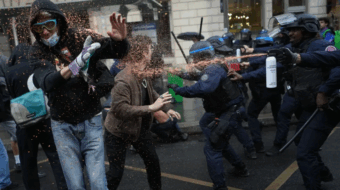
We are well past the time when the Olympics are simply a device for bringing people together and in recent years in Brazil, in Paris and now in Los Angeles the event has been used as an excuse for displacing areas with recalcitrant and minority populations from urban neighborhoods. In Paris in 2024, besides the massive police presence which as Jules turned the center of the city into an armed camp, blocking all access to the Seine, there was also a massive loading of the city center’s homeless onto buses to transport them out to the periphery for the duration of the event, giving the image of a sparkling center unfazed by Macron’s massive transfer of wealth which increased the homeless population. The same will be done in Los Angeles as that city for the event abolishes all images of its own homeless, with of course, the problem not solved and with both populations returning after the games.
The larger problem, and what is becoming the goal of the Olympics, is the clearing away of neighborhoods; their permanent alteration to build sports complexes which afterwards may remain hollow entities. At Saint Denis, an area that is the most consistently left in France and which has the most mixed population, all that’s left of a whole neighborhood around Pleyel is a hollowed-out arena, surrounded by walls papered with decals. After this forced migration, in the next municipal election, the mayor of this long-time communist area was replaced instead by a socialist, (read: centrist democrat), who ran a law-and-order campaign. The promises of the Paris Olympics for city prosperity never materialized as tourists, except the Olympic visitors, stayed away, prompting the closing of small businesses.
One target of the 2028 Olympics is the final gentrification of the Inglewood area, a center of Black and Hispanic populations. But that makeup is changing fast as the city expands and the Inglewood sports complexes, Sofi Stadium, The Intuit Dome, and The Forum, where the 2028 swimming and basketball events will be held, are a huge part of this attempt to remake the area. Olympic pools are replacing areas formerly used to house hundreds of families. LA has a long history of displacing its minority populations to build sports arenas, with one of the most prominent being the clearing of low-income villages in the area subsequently named Chavez Ravine and the subsequent building not of affordable housing as promised but of Dodger Stadium.
In the Inglewood area, with the establishment of these complexes, the city has lost more than 10 percent of its working-class Black population, which can no longer afford the increased rents, while meanwhile the white population has increased by 60 percent. This gentrification process will only accelerate in 2028, aided and abetted by the buying off of the city and state’s politicians, as Steve Ballmer, who owns the Clippers for whom the Intuit Dome was built, contributed half a million to Inglewood mayor James Butts and one million to Governor Gavin Newsom’s campaign. LA’s population last year had to face the devastation of the destruction of the Black middle-class neighborhood of Altadena in the natural disaster of the Eaton fire, and now Black and Latinx populations face the man-made destruction of the Olympics.
As ubiquitous as these massive sports events are, so is what accompanies them—sports gambling. As American workers grow more desperate, with both they and their European counterparts now living paycheck to paycheck, one of the compensations that is offered is all kinds of betting on sports, with profits from the industry expected to reach 14 billion in the next three years.
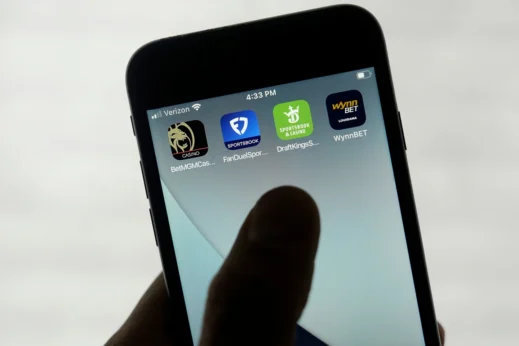
Young men especially are wagering not just with money from prior winnings but from day-to-day expenditures, contributing to bankruptcies, inability to pay loans, and exorbitant debt collection fees.
Since the Supreme Court in 2018 struck down a law prohibiting gambling in most states, sports gambling has morphed into a high-tech industry. Beyond even the Fan Duel and DraftKings apps and their ease of betting is the now contest-to-the-death between Polymarket and Kalshi, which promote betting on any contest, sport, or political event, but whose base still is sports betting. The two competed for the fan base in the New York Knicks’ recent NBA championship, with a 5-year-old from Queens winning a contest as a replica of the Knicks star point guard Jalen Brunson and then exclaiming “Thank you, Polymarket,” the sponsor of the contest. Inside the arena, the film star Timothy Chalamet, a prominent member of the Knicks celebrity row, was dancing around the arena promoting Polymarket rival Kalshi while an entire floor of the Knicks home Madison Square Garden was also renamed after Kalshi. The sports betting craze is so prominent that Mark Zuckerberg’s Meta, not to be left out of the action, is creating an app called Arena to compete with Kalshi and Polymarket.
Sports gambling finally is also affecting play on the field with more and more players throughout sport involved in the action and thus compromising the supposed integrity of the sport in a way that would make Pete Rose blush. In-game betting is one of the main elements of the craze with Ivory Coast footballer Elye Wahi, who played in the World Cup, under investigation for deliberately drawing yellow cards that bettors in the know could capitalize on. In baseball once star pitcher Emmanuel Clase was indicted for rigging individual pitches with bettors wagering on the type and speed of the pitch thrown. In-game fixing is known in the industry as spot-fixing.
In college football the starting quarterback for Texas Tech in this upcoming season Brendan Sorsby has admitted to betting $90,000 on his former team Indiana while he was a freshman backup. A judge ruled him eligible to play in a high-profile position with Texas Tech quarterbacks boasting in their revered history perhaps the greatest quarterback to ever play the game Patrick Mahomes.
As the gambling becomes more ubiquitous since it has moved online and as younger audiences wage bets using their rent money, the game itself becomes more fixed and the authorities seem to do little to stop it. Hall of famer and still current Portland Trail Blazers coach Chauncey Billups is accused of luring bettors to a high-stake mob poker game where everyone else in the game except the gambler who lost 7 million was in on the scam. Billups, though suspended, is nominally still the Trailblazer’s coach.
Sports, far from being remote from the social and economic reality of the societies around it, continues to mirror the corruption and inequality of these societies.
As with all op-eds published by People’s World, the views expressed here are those of the author.
We hope you appreciated this article. At People’s World, we believe news and information should be free and accessible to all, but we need your help. Our journalism is free of corporate influence and paywalls because we are totally reader-supported. Only you, our readers and supporters, make this possible. If you enjoy reading People’s World and the stories we bring you, please support our work by donating or becoming a monthly sustainer today. Thank you!
CONTRIBUTOR