Only one-third of all speaking characters across the top movies of 2025 were girls or women— a figure that hasn’t meaningfully moved in two decades. That’s the headline finding from Dr. Stacy L. Smith and the USC Annenberg Inclusion Initiative’s annual report tracking diverse representation on screen and behind the camera for Hollywood’s highest-grossing films.
The study, which began in 2007, examines inclusion across 1,900 of the top-performing theatrically released films in the U.S. The research assesses every speaking or named character on screen for gender and race/ethnicity. Findings on LGBTQ coding were added in 2014, and characters with disabilities in 2015. The study also examines the frequency and percentage of women and people of color employed as directors, writers, producers, composers, and casting directors.
 The report arrives amid a media landscape in upheaval—threats to freedom of speech and the press, the disruption of artificial intelligence, and so-called culture wars. Yet on screen, the numbers tell a different story: Little has changed when it comes to diversity.
Reversal for women
Women filling one-third of character roles may seem like a lot, but as the report notes, women are half the population. While there has been some increase since tracking started in 2007, the report explains that 2025 actually reflects a reversal from 2024, when more than half of leads/co-leads were female.
Of the 100 top-grossing films of last year, 38 depicted a girl or woman as the lead or co-lead. Of those 38, just 15 had a woman from a marginalized racial group. And only three had a woman lead/co-lead over the age of 45.
Arguing that the numbers show how the entertainment industry underestimates girls and women, the researchers assert:
“With female characters clocking in at 33.6% in 2025, last year was not meaningfully different than 2007 (29.9%). Only 14% of the top films last year were gender-balanced, and women 40 and older filled only a quarter of roles on screen. Popular movies reflect a Groundhog Day for women. In other words, popular film remains another area of society with little representation and no change.”
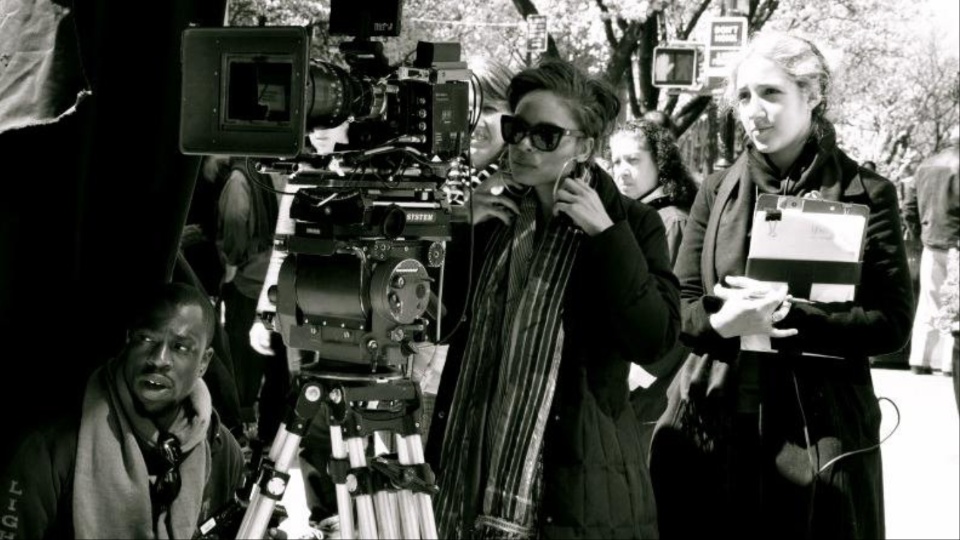
 When it comes to women working behind the scenes in roles such as writer and producer, the increase has also been non-significant since 2007. Only 16% of credited screenwriters were women. This calculates to a gender ratio of 5.2 men working in the role for every one woman. Women held 8.2% of director jobs, but that was a decline from 14.3% the year prior.
Women composers have made only marginal gains: from zero in 2007 to just 8.5% of those working on a top-grossing movie in 2025, a percentage that hasn’t changed much in years.
Racial representation largely restricted to men
The report notes that while no single racial/ethnic group saw an increase in 2025, the overall percentage of characters from underrepresented racial/ethnic groups reached proportional representation for only the fourth time in 19 years.
The genres of animation and comedy films recorded some improvement, seen as “areas of progress” in the report. Yet, despite what appears to be an advance, of the 100 top-grossing films of 2025, 30 had no Black characters at all. And there was no change in the number of movies that featuring no Hispanic/Latino characters, meaning that nearly 50% of the most popular movies of the year “were missing Hispanic/Latinos altogether.”
 The study broke down representation by race, ethnicity, and gender, and found that women of color across every racial and ethnic group filled fewer speaking roles on screen than men. The report notes that “2025 brought more erasure of Black characters on screen in general and Black girls and women in particular.”
That gap may trace back to who’s making the casting decisions in the first place. Behind the camera, women of color were vastly outnumbered as directors—only six underrepresented women helmed a top-grossing movie last year, and all six were Asian. Casting directors show a similar imbalance: white women hold 69.6% of those positions, while women of color make up just 10%. With so few women of color in the rooms where casting and directing decisions get made, it’s little surprise so few end up on screen.
LGBTQ representation less than 1%
Fewer than 1% of all speaking characters in 2025 were lesbian, gay, bisexual, or transgender. The report also found that no trans characters appeared in the top movies of 2025.
Only one film had a lead/co-lead from the LGBTQ community, and of the top-grossing 100 films, 78 had no LGBTQ characters at all. Given that records show an estimated 10% of the U.S. population identifies as part of the LGBTQ community, these representation figures are substantially low.
Breaking it down by race, gender, and type of role, the LGBTQ characters named and speaking on screen were often male, white, and young adults. They were also rarely shown as parents or caregivers. The study asserts that “these trends reveal that popular films do little to showcase the reality of the LGBTQ community off screen.”
Only 2.8% of speaking characters had a disability
More than a quarter of Americans—27.2%—live with a disability. Yet in 2025, only 2.8% of speaking characters across the top 100 films were shown with one.
Within that small sliver, the imbalance compounds: the majority were men (69.4%), and nearly 70% were white. The shortfall isn’t just in numbers, either.. The percentage of lead or co-lead characters with a disability decreased from 2024, and 42.2% of speaking or named characters with a disability were described by the report’s authors as “inconsequential to the storyline.”
 “While many Americans may experience a disability at some point in their lives,” the report’s authors write, “they will not see this reality in popular movies.”
Progress in a turbulent industry
The report is dense with statistics, and it doesn’t shy away from the industry’s current struggles, describing entertainment as being in a “changing, contracting, and difficult moment.” But its more urgent observation is about trajectory: after 2024 showed signs of hope, the report says 2025’s “prevailing trend” is little to no change.
Its proposed fix centers on labor—specifically, how hiring decisions get made. The authors argue that applying inclusion criteria to hiring can create real change, opening opportunities for people in marginalized and underrepresented groups who are otherwise passed over. That means rethinking how writing, producing, casting, and hiring happen across the board: setting explicit inclusion goals and deliberately bringing in “new voices,” rather than relying on the industry’s existing habits.
“Only by adjusting how things are done can the industry hope to change what the end product reflects,” the authors assert.
That argument lands against a specific backdrop: political pressure to roll back DEI (Diversity, Equity, and Inclusion) efforts. The report is direct about it, noting that resistance to this kind of change predates the current moment, and arguing that systemic change is needed regardless.
“Rather than pursue the same playbook and achieve the same results,” the authors write, “perhaps this is the very moment to identify opportunities to create change.”
We hope you appreciated this article. At People’s World, we believe news and information should be free and accessible to all, but we need your help. Our journalism is free of corporate influence and paywalls because we are totally reader-supported. Only you, our readers and supporters, make this possible. If you enjoy reading People’s World and the stories we bring you, please support our work by donating or becoming a monthly sustainer today. Thank you!
CONTRIBUTOR