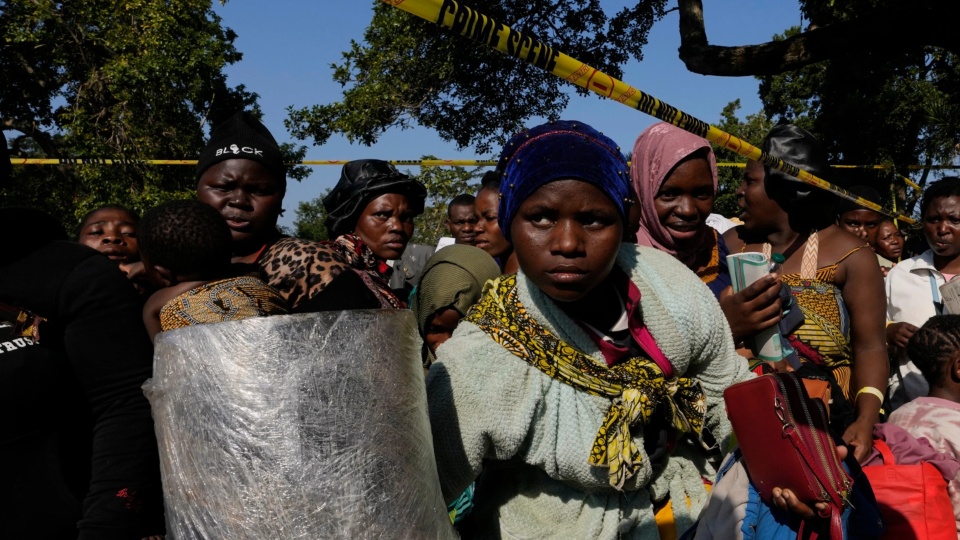
On June 30, thousands of demonstrators in major South African cities, especially Durban and Johannesburg, took to the streets to demand that supposedly undocumented migrants from other African countries be expelled from South Africa to make their jobs and business opportunities available to South African citizens.
Although the demonstrations were billed as being peaceful, there was violent disorder in a number of places. Demonstrators broke into small businesses, called “spaza shops” in South Africa, harassed and even assaulted the shopkeepers, and engaged in looting and vandalism. Persons believed to be from other African countries were accosted in the streets or in their homes by rioters demanding that they prove their legal right to be in South Africa. There were a few deaths in these incidents, which the police had a hard time controlling.
How successful was this “March and March” action? The government reported that it had deported about 53,000 undocumented foreigners, mostly from the extremely poor nation of Malawi, and several thousand more people, fearing for their personal safety, crossed the borders to get out of South Africa. People who left, no doubt, included non-citizens legally in the country as well as undocumented people.
But what was the impact within South Africa? Will the expulsion of this modest number of people from other African countries help to alleviate poverty and unemployment within South Africa?
Consider:
South Africa is the most developed of the sub-Saharan African countries, with a population of 63 million. The total labor force in South Africa is 25 million. In 2026, however, South Africa’s unemployment rate is 32.7%. This means that there are about 9.4 million unemployed people in South Africa, in spite of the nation’s wealth and relatively high level of development. Many of the unemployed are young people.
Before March and March, there were about two to three million foreign workers in South Africa. The importation of thousands of workers by South African mines and other industries has continued on an enormous scale for a very long time, ever since diamonds and gold were discovered more than a century ago.
The expulsion of 53,000 people by the government and several thousand more who were driven out by fear of violence is, obviously, not going to solve problems of unemployment and poverty in South Africa.
The organizers of March and March are, in most cases, well-educated people. They surely are aware of these statistics and their implications. So, what’s their agenda?
On Nov. 4 of this year, South Africa will hold elections for the National Assembly and also provincial and local legislatures. At the last elections, in 2024, the African National Congress (ANC) lost its parliamentary majority and was forced into an unwieldy coalition arrangement with a number of other parties, including ones well to the right of it.
The historic Tripartite Alliance of the ANC, the South African Communist Party (SACP), and the Coalition of South African Trade Unions (COSATU) is no longer running the country. This state of affairs results from multiple corruption scandals during the present administration, as well as administrative problems.
To give just one example, last year there was a huge problem with electrical generation, which led to a large number of “load shedding” incidents, that is, the deliberate shutting down of electrical service to avoid more serious unplanned blackouts.
One of the reactions to this state of affairs is that the SACP has announced that, for the first time since liberation from apartheid in 1994, it will be running local legislative candidates under its own name and not jointly with the ANC on Nov. 4.
Also, the Communist Party and other left groups held a “Conference of the Left” in Boksburg, Gauteng Province, at the end of May, with 100 political, labor, and other groups participating. The ANC leadership declined to attend and denounced this activity. Also, the Communists and labor groups sharply denounced the March and March activities as divisive and a distraction from the real problems of the working class.
At the diplomatic level, South Africa’s relationships with other African countries have taken a hit. Ghana and Nigeria have protested attacks on their citizens during the March and March disturbances, which appear to have caused several deaths. There is talk of demanding that the South African government pay indemnities for losses incurred by citizens of other countries.
None of these are good things to be happening while people like Donald Trump and Elon Musk have Africa on their menus.
We hope you appreciated this article. At People’s World, we believe news and information should be free and accessible to all, but we need your help. Our journalism is free of corporate influence and paywalls because we are totally reader-supported. Only you, our readers and supporters, make this possible. If you enjoy reading People’s World and the stories we bring you, please support our work by donating or becoming a monthly sustainer today. Thank you!
CONTRIBUTOR