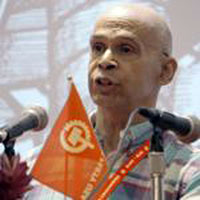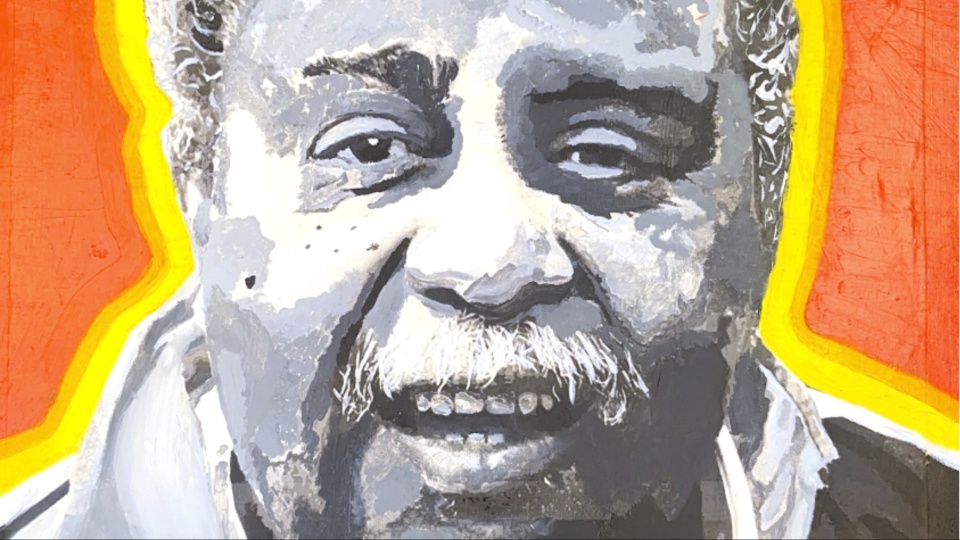
I first met Arturo Griffiths, Jr., along with his comrade and best friend, Jaime Cruz, in the fall of 1979 when I moved to Washington, D.C., after graduating college. We became acquainted in the ranks of the Young Workers Liberation League and the Communist Party USA, where we were all destined to spend our lives in pursuit of a socialist USA.

Armed with a gregarious personality and engaging smile, Arturo was a born working-class politician and organizer, skills he likely inherited from his Panamanian father and namesake. His dad had been a candidate for D.C. mayor and, like father, like son. Arturo seemed to know everybody, particularly in his home turf of Mount Pleasant and Adams Morgan. Walking the streets with Arturo, you could easily imagine him to be some local legend. He’d be shaking hands, greeting local shop owners by name, stopping to chat with school crossing guards. But no, he was just an ordinary guy with an extraordinary mission in life: Arturo wanted to change the world.
At the time, our political activity centered on working with young people. We organized rallies for youth jobs, stood on picket lines demanding an end to apartheid in South Africa, and studied the writings of Marx, Fidel, and W.E.B. Du Bois in study groups, like our Paul Robeson School.
Our initial organizing efforts were utter failures: A jobs rally at a local elementary school brought only a few hopeful souls looking for work. Disappointed but undeterred, we returned to the drawing board and thought long and hard about what went wrong. Arturo argued that the jobs issue was correct—after all, the country had entered a recession and unemployment, particularly among Black youth, was high—it was the form that we were using that was mistaken. He suggested that instead of attempting a rally inside a school on a Saturday morning we should instead sponsor a street festival along with an art show of local artists.
And that’s exactly what we did—and it was an outstanding success. The Youth Festival of the Arts, featuring high school artists, was held at D.C.’s Corcoran Gallery, and a street party was on O Street in the Shaw neighborhood. We set up stages on either end of the block and had a Go-Go band on one end and a salsa group on the other and let the music play. Within an hour, O Street was packed, with the music only interrupted by a brief rally during which we passed around petitions demanding jobs. Arturo went on a few years later to head the D.C. Latino Festival. He also worked closely with the Adams Morgan summer festivals.

Arturo also aspired to elected office and ran a couple times for city council at-large and once for mayor. Disappointed with the Democratic Party even back then, he ran both as an independent and on the Green Party line. I was honored to manage his initial city council and mayoral bids. And while we did not win, the campaigns brought with them essential skill sets. We learned to canvas, write press releases, make campaign ads, and how to work with voter registration lists. It was organizing 101.
Another issue that drew our attention during those years was GOP attacks on public education via the tuition tax credit movement. Initiative 7 was a ballot measure that proposed offering families a tax credit of up to $1,200 to cover the cost of sending their children to private schools. Here again, Arturo, particularly through his connection to D.C.’s labor council, helped organize a local coalition against the measure.

We reached out to community and civil rights organizations and spoke before the D.C. African American ministers’ association, who at the time were aghast at the GOP’s crafty bid. The ministers weren’t having it: “We’re not going back” echoed over and over from the pulpit. Due to wide pushback from D.C. residents and other coalitions’ efforts, the ballot initiative was overwhelmingly defeated, 90% to 10%.
After the 12th World Festival of Youth and Students in Moscow in 1985, Arturo helped organize a Youth Revival for Survival in D.C. that brought U.S. youth together around issues related to the nuclear standoff, the environment, and international solidarity with Cuba and the fight against South African apartheid. It was then that he first developed symptoms that turned out to be early indications of his later battle with diabetes. I remember him sitting in the local Revival for Survival office drinking glass after glass of cold water seemingly unable to quench his thirst.

I moved from D.C. to New York that year, but we remained in touch through our participation in the National Committee of the Communist Party to which we were both elected in the late 1980s. After the collapse of the USSR and the split in the CPUSA, Arturo did not flinch and headed the party’s local efforts. He became a union organizer and active in the fight for immigrant rights, leading a successful coalition effort to provide driver’s licenses to undocumented workers.
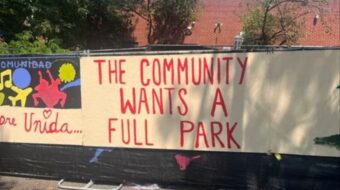
Arturo remained in the leadership of the CPUSA after the turn of the century, only standing down after 2019 due to health concerns. In spite of failing vision and other challenges, he remained active in D.C. politics and was a founding member of the Claudia Jones School for Political Education that was his brainchild. His last campaign was to revive Amigos Park, a local park in his Mt. Pleasant neighborhood. That effort is ongoing.
Arturo died a year ago today. His spirit and example live on in us. I fondly referred to him in both private and public as “my leader” because of his influence on the politics of my youth, and that influence is ongoing. I learned from him the signal importance of mass politics and the need for flexible, creative tactics. I also learned the need for stick-to-itiveness, or what some might call downright stubbornness.

Arturo hated capitalism and colonialism and was a fierce anti-imperialist. If U.S. imperialism was against something, Arturo was for it and you couldn’t convince him otherwise—in that respect, he reminded me of my grandmother, Pauline Taylor. We had more than one argument about the likes of Putin and Gaddafi.
The truth is Arturo had a steely resolve. And it was golden. When it came to politics, he never gave up, gave out, or gave in: He lived a committed life to the end.
CONTRIBUTOR