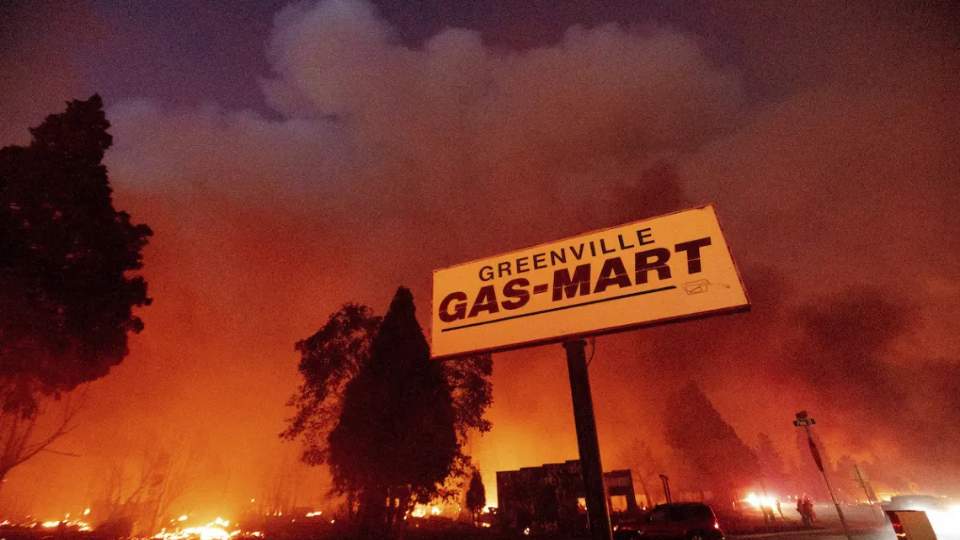
In 2015, 196 nations came together to sign the Paris Agreement in order to combat the growing threat of climate change. The goal was set to prevent the Earth from exceeding a global warming limit of 1.5 degrees Celsius (2.7 degrees Fahrenheit). Scientists warned that passing this threshold would raise the risk of severe, permanent changes to the Earth—from extreme deadly weather to irreversible damage to important ecosystems.
Over ten years later, a recent UN report says the world has failed to hold the line on warming and that we are on a collision course to pass the danger point. This dire, devastating development has many asking whether anything can be done and how to keep fighting when doomsday headlines are everywhere.
Titled Limiting Overshoot, the new report by the UNEP (United Nations Environment Programme) doesn’t mince words when it comes to the climate crisis the world faces and will continue to face in the near future. Previous reports urged leading world powers to decrease greenhouse gas emissions and the like to prevent climate catastrophe. The latest assessment asserts it is too late for that, and society must brace for impact while working quickly to reverse course.
UNEP Executive Director Inger Anderson explains that “there are no good outcomes above 1.5° C,” and that “extreme weather, glacier melt, ecosystem loss, and sea-level rise will intensify.” The director went on to state that “human health, food and water security, cities, and infrastructure will come under increasing strain,” and that “some losses will be irreversible even if global temperatures eventually decline.”
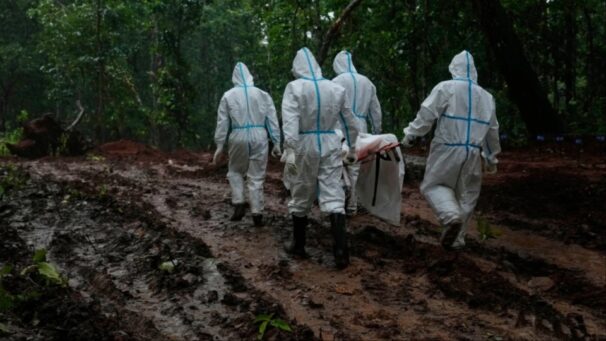
They refer to this as “overshoot, peak, and decline pathways” (sometimes shortened as Overshoot pathways) that deals with pathways that first exceed a global warming level (such as 1.5°C.) and then a return to or below that level within a specified period. To put it plainly, avoiding the planet’s crossing into the danger zone is off the table. The new course is attempting to climb back after going over the cliff.
Role of the United States and leading world powers
In the United States, the fight against climate change has been fraught with pushback from those in political power—particularly in the White House. The UNEP assessment solidifies many of the warnings given by the Bulletin of the Atomic Scientists’ Science and Security Board (SASB) in their 2026 Doomsday Clock report.
In it, they noted that atmospheric carbon dioxide—the greenhouse gas most responsible for human-caused climate change—had reached a new high. The report stated that the Trump administration sought to “systemically repeal targets and policies, as well as decimate funding for climate change mitigation and science.” The administration’s actions in 2026 to change that conclusion.
In what many climate and health advocacy groups called a “dark day for science,” President Donald Trump announced in February the official termination of the Environmental Protection Agency’s 2009 landmark determination that greenhouse gases warm the planet and threaten the health and welfare of those who inhabit it.
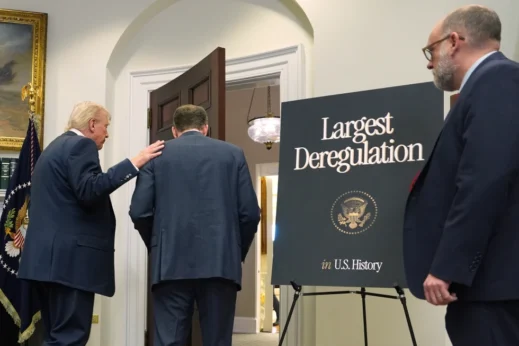
The president has continued to champion the fossil fuel industry, which is a top source of atmospheric carbon dioxide. At the same time, Trump has created roadblocks to renewable energy, which scientists and climate advocates say is one of the key ways to combat warming, as wind, solar, and hydropower generate electricity without releasing carbon dioxide.
In 2017, during his first term, Trump announced his intention to withdraw the U.S. from the Paris Agreement, calling it a “one-sided” deal that was not in Americans’ best interests. Under President Joe Biden, the U.S. re-entered the agreement in 2021. After signing an executive order in 2025, Trump had the U.S. officially withdraw from the agreement in January of this year. And while there are several countries that have exited the agreement, scientists say no one will be spared from the dangers of the climate crisis.
“This summer’s scorching heat, raging wildfires, and deadly floods are a warning of what lies ahead. We must make the overshoot above 1.5 degrees as small and short as possible. That demands an overshoot of ambition,” said UN Secretary-General António Guterres.
The UNEP’s Andersen asserted that around the world “extreme heatwaves are already proving that climate impacts will strike faster, hit harder, and last longer—costing more lives and causing deeper disruption.”
The report states that the most optimistic scenario will see Earth’s temperature peak at 1.8°C above pre-industrial levels—well above the Paris Agreement goal of limiting warming to 1.5°C. All the other predicted outcomes see even higher peaks.
Chris Bowen, Australian Minister for Climate Change and Energy, and President of Negotiations for COP31, stated in a press release, “The recent energy crisis has reminded the world of the need to reduce our dependence on fossil fuels, accelerate the transition to renewable energy, and bolster climate cooperation.”
The report puts a lot responsibility on leading world powers, asserting that “countries with greater historical responsibility for climate change should act the fastest and with the greatest ambition,” noting that, in order to succeed, there will need to be “stronger political will and multilateralism, and more agile and inclusive governance, with equity and justice at the core of all action.”
Accept defeat or rally to fight?
While the report is grim, scientists and UN officials also offer ways to limit excessive warming and try to bring the temperature back to the agreed-upon threshold. Their goal is net-zero emissions, and eventually net-negative. The timetable for achieving that, when the world has already crossed the line, remains to be seen.
The question now is what, if anything, can advocates and working people do when presented with such a bleak outlook for the future of their environment. In the midst of heatwaves, flash floods, and other natural disasters—topped with political turmoil—many are attempting to not fall into defeatism and despair.
Jasper Inventor, Deputy Program Director at Greenpeace International—a global campaigning network that uses protest to expose environmental problems—called the UNEP report “news none of us wanted to hear.” But, he said, “overshoot is not the reason to give up and surrender 1.5°C. It’s a heartbreaking moment, and we need to reflect on that, but every fraction of a degree still matters, and the UNEP report must now serve as a defining call to action.”
Senior Scientist at the Greenpeace International Science Unit, Dr. Jerry Jose, added that “governments must translate responsibility into action: a rapid, just and legally grounded transition away from fossil fuels with no further expansion of coal, oil and gas.”

Marc Brodine, the author of Green Strategy, from International Publishers, explained to People’s World that the world “needs the science, which is more dire with every report, and we need developing technology, which can help us address the current and coming crises.” Putting the spotlight on companies and businesses that have contributed to the climate crisis, he noted, “There are 70 major companies responsible for most of the greenhouse gasses causing the climate crisis, who have profited for many decades; they are the ones who need to pay for fixing the problem they created.”
Brodine went further by highlighting what he sees as a major missing ingredient in the UNEP report: the mass movement.
“Only a powerful worldwide movement to eliminate the burning of fossil fuels and protect our shared environment can force change on the resistant system of capitalism. Billions of people around the world are increasingly aware of the threats from climate change, millions have demonstrated around the world repeatedly.

“We need a broader movement, allied with labor, civil rights, and other progressive movements; only such a force can transform our politics and economy. Capitalism is the main cause of the problem, and the main obstacle to fixing it.”
The clash between capitalism and the natural environment that Brodine points out is not a new concept. As far back as the 1800s, there were a number of scholars, particularly during the Industrial Revolution, who noted the problems to come. Karl Marx, in Volume 1 of his classic work Capital, explained: “…all progress in capitalistic agriculture is a progress in the art, not only of robbing the laborer, but of robbing the soil; all progress in increasing the fertility of the soil for a given time, is a progress towards ruining the lasting sources of that fertility.”
Does that mean then that destruction is inevitable? Many advocates say no.
Scholar and activist Ellen von zur Muehlen told People’s World that corporate media messaging is part of the problem when it comes to keeping working people informed about what is going on. Noting that the U.S. is the “largest historical polluter and remains one of the top emitting countries today,” she added that dramatic media headlines “spread a sense of doomerism, reinforcing the idea that nothing can be done, and are extremely dangerous.
“I saw folks expressing the idea that the fight was over, that nothing could be done, and that they may as well enjoy what’s left of the world while they can,” the environmental studies PhD candidate said.
Von zur Muehlen said the UNEP report was grim, but giving up shouldn’t be an option.
“Rather than defeatism, it implies that we must act with urgency to effect large-scale changes in nearly every aspect of our lives and the economy.” She urged those feeling anxiety to learn about climate risks and concerns in their local areas, find out what resources exist, and consider creating a disaster preparedness kit.
She also stressed that now is the time for people to get involved with environmental advocacy. “Hold polluters accountable, stop data center construction, or promote conservation goals.
“Organizing works. Advocates and activists have stopped development projects and data centers, and public pressure has in some cases caused state and local governments to step in where they can. This kind of work must continue,” she explained.
And just as Brodine highlighted the ills of capitalism and the power resting in the masses, von zur Muehlen noted that “fighting against the Trump administration’s pro-fossil fuel and anti-life agenda is critical, but we also need to begin planning for what comes next.”
With the climate future outlined by the UNEP report, she argued “there is no option to return to the status quo. We must, and with great urgency, begin working on a future that gets us out of the mess. What the climate catastrophe reveals is that the model of economic growth and development that dominates the world economy is untenable and must be abandoned.”
The UNEP report comes amid unprecedented heat-related deaths, more frequent natural disasters, and increased food uncertainty. As many activists and scientists have pointed out, much of the responsibility falls on those in office and in corporate boardrooms.
Yet, as they’ve also made clear, that doesn’t mean people can’t be at the forefront of driving real change and pulling Earth—and humanity—back from the brink of destruction. In fact, many would argue that working people must lead the charge.
“By turning towards this conversation and educating ourselves and our communities, we can each find ways to contribute to building that future,” von zur Muehlen stated. “Real solutions will come from working people and our communities, not from tech companies or politicians.”
We hope you appreciated this article. At People’s World, we believe news and information should be free and accessible to all, but we need your help. Our journalism is free of corporate influence and paywalls because we are totally reader-supported. Only you, our readers and supporters, make this possible. If you enjoy reading People’s World and the stories we bring you, please support our work by donating or becoming a monthly sustainer today. Thank you!
CONTRIBUTOR